
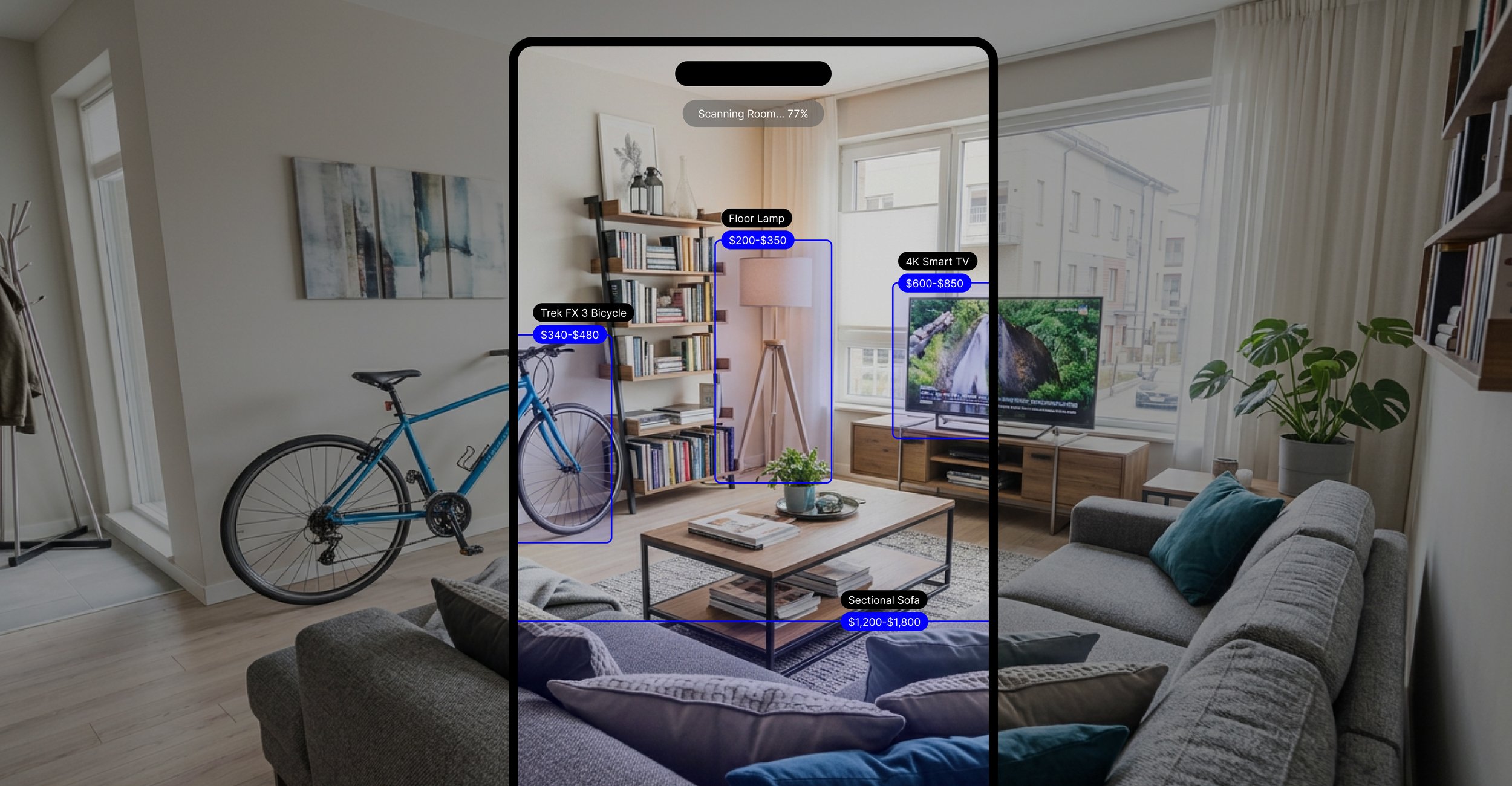
AI-Powered Insurance QuoterProviding a personalized quote for renters insurance with an AI-Powered catalog of everything they own.
-
How might we take an AI-created prototype of this concept and make it usable for real people?
-
The primary KPI was to increase the amount of renters signing up for renters insurance by providing them with a personalized, confident quote before they even talk to an agent.
Secondary KPIs were related to making the tool usable: Can we decrease the friction in every step and can we accommodate all of the edge cases?
This project has not been launched yet as of August, 2026, so a final evaluation of KPI success has yet to be determined. -
I was the Lead UX Designer for the project, working with a team of talented AI Developers.
This tended to look like a lot of analytical people in the room ready to move fast, but without validation or sound judgement of what we were putting effort into. That became my niche gap to fill.
AI-Designed Prototype
The project started backwards: with a finished design. The Replit prototype was created by AI Developers and it acted like the vision for the project. Instead of workshops to validate an amorphous idea, the stakeholders were able to buy into it quicker by interacting with the polished prototype.
While it created a lot of hype around the project, it quickly became apparent that the Replit prototype was full of usability holes. It didn’t take human behavior, edge cases, error states, or any of the other complexities of a project like this into account.
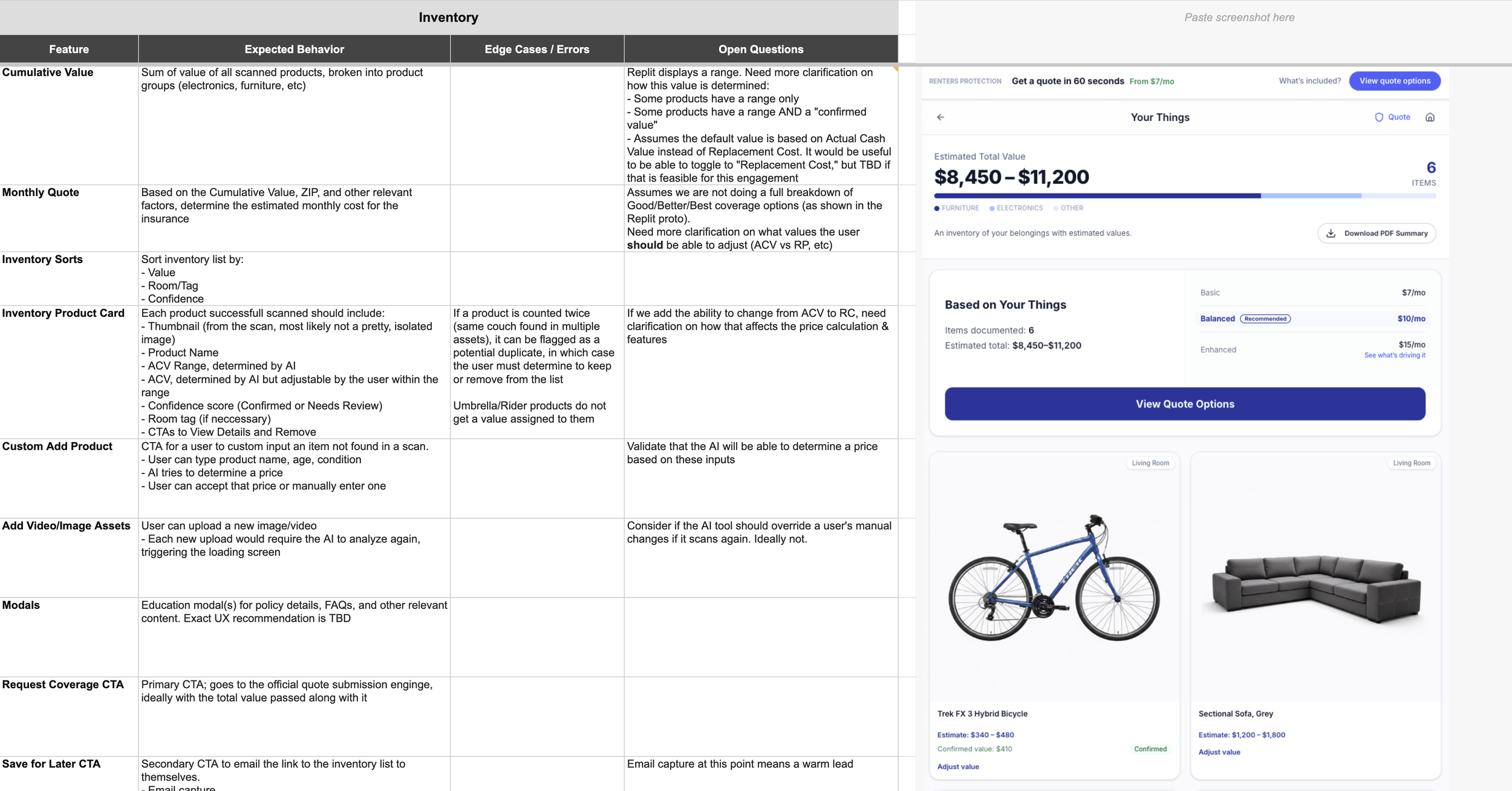
Therefor, step one of my process started at the end: Testing the prototype. From there, I developed the official documentation of features, requirements, and roadmapped items for the tool.
Usability Testing • Product Documentation • MVP & Roadmap Planning
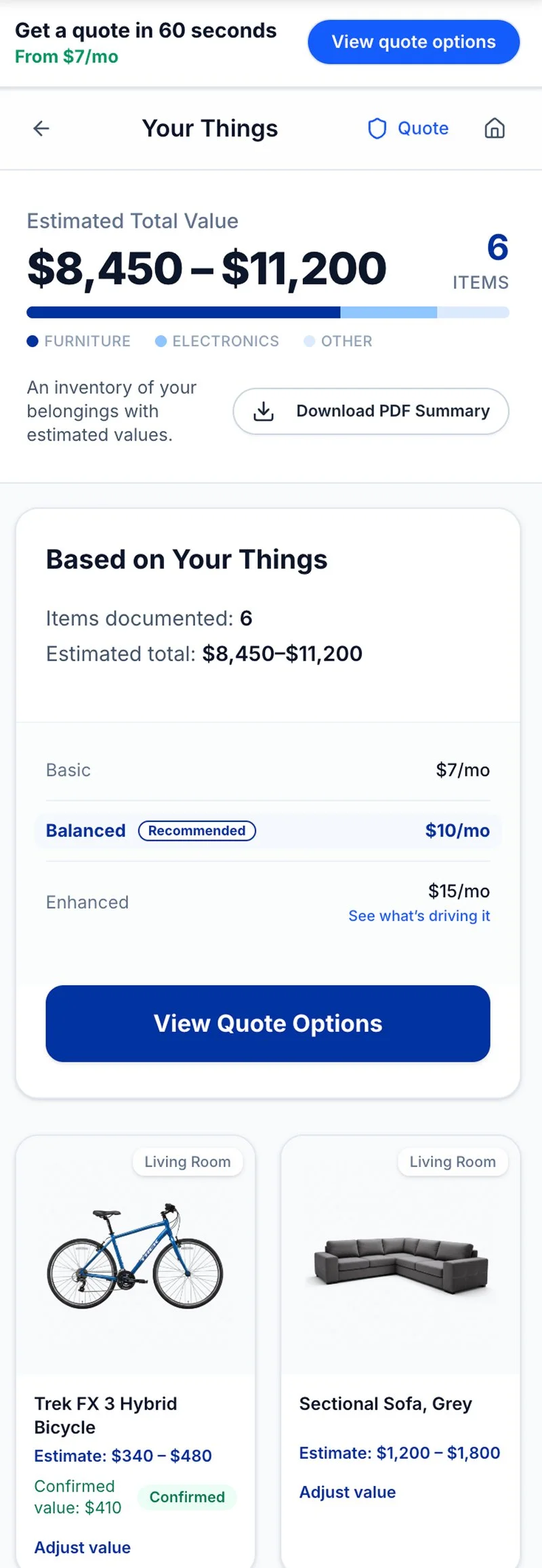
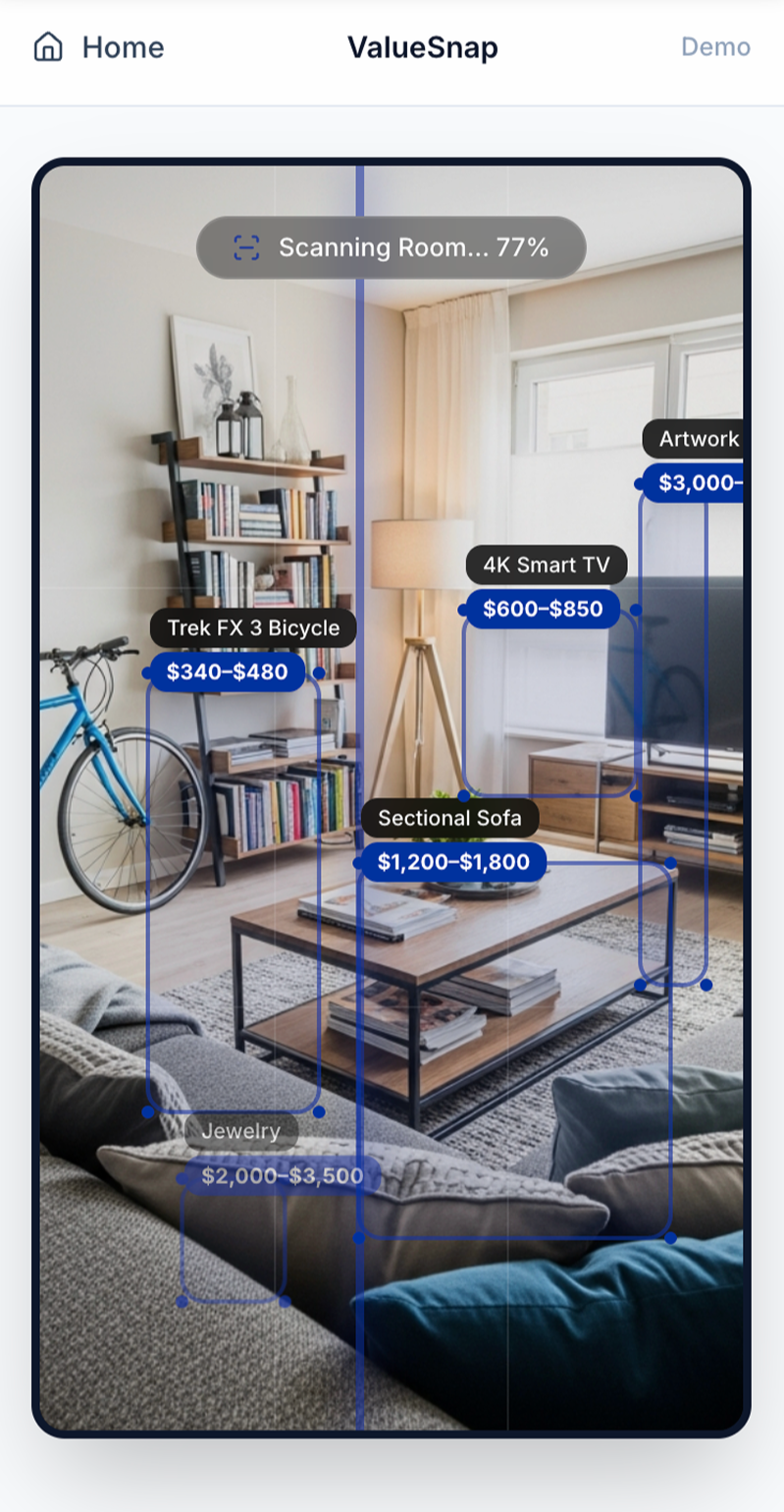
From documenting the Replit demo, actual implementation questions could surface, such as policy details, error and edge case scenarios, and pointing out user behaviors that might not match the happy path.
Architecture & Wireframes
With requirements that were firmly rooted in human behavior and the client’s KPIs, we could start to re-imagine the prototype. We expanded the asset collection process to allow users to upload a series of photos and videos, added educational content along the way, and included more robust inventory management tools.
Wireframing • AI Development Solutioning
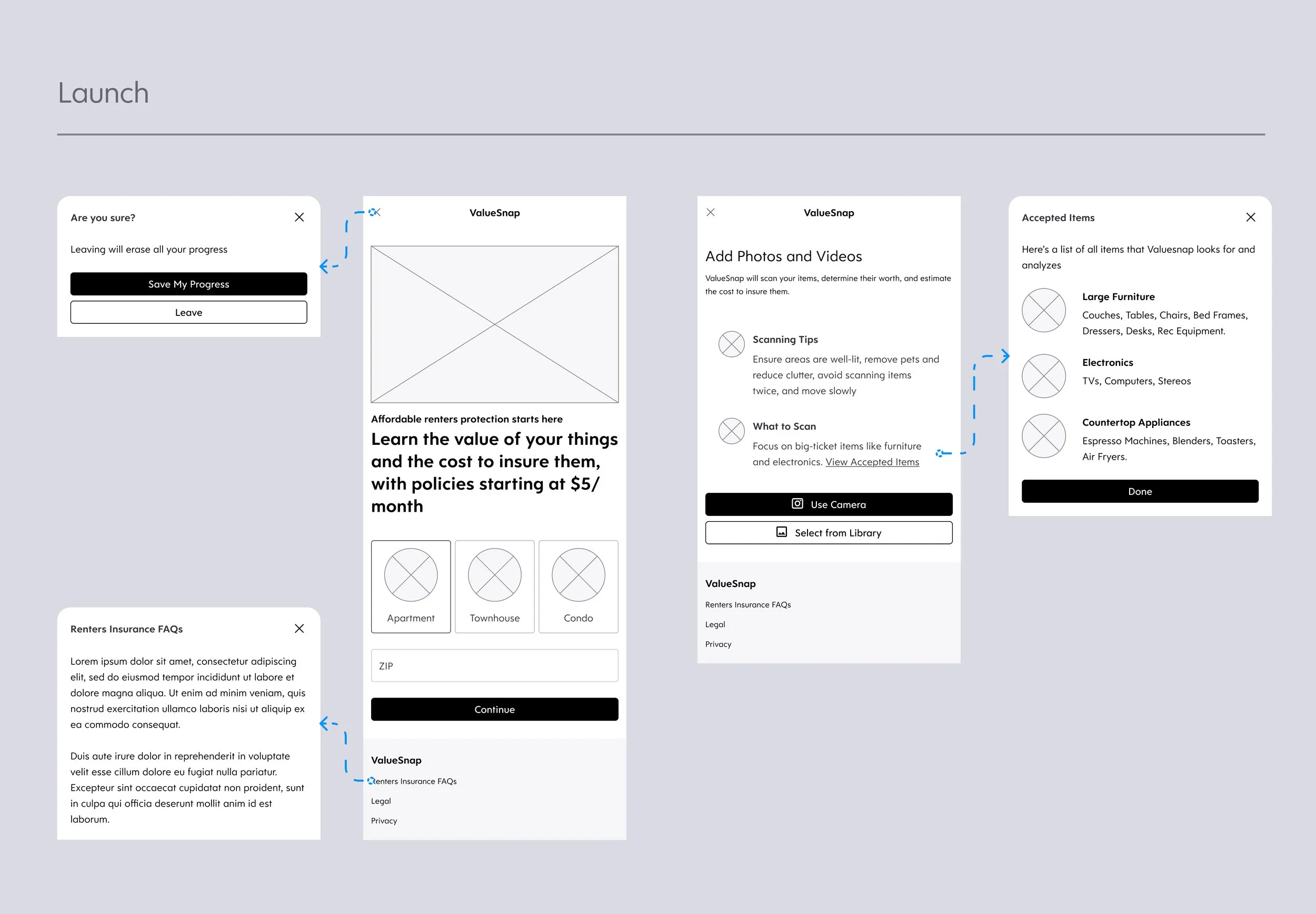
The launch screens added education for the users on what to scan and the option to use their camera or upload from their native library
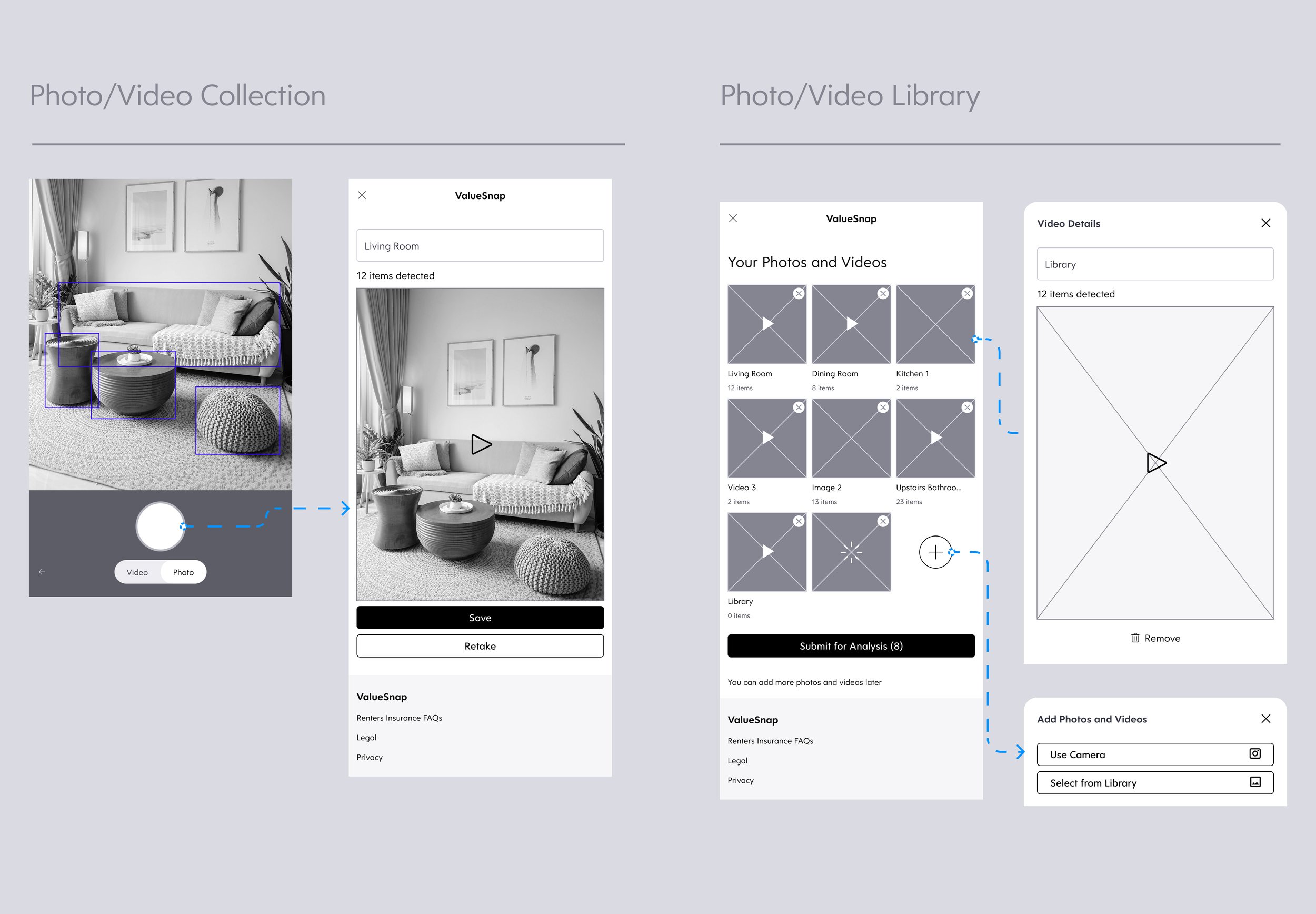
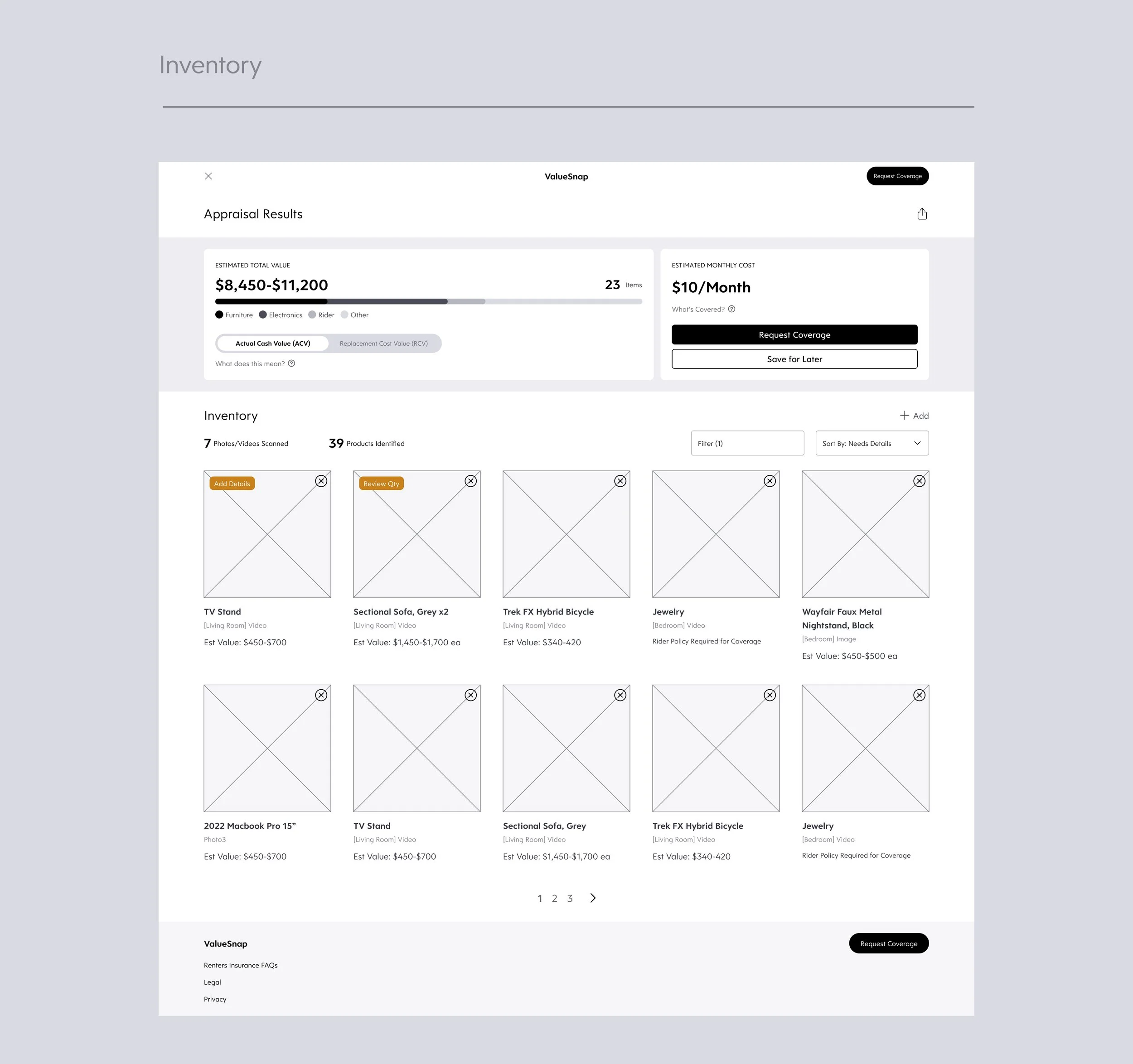
Considering that users might prefer to take multiple photos or videos to catalog all of their belongings, an asset library concept was added, which was completely missing from the original Replit.
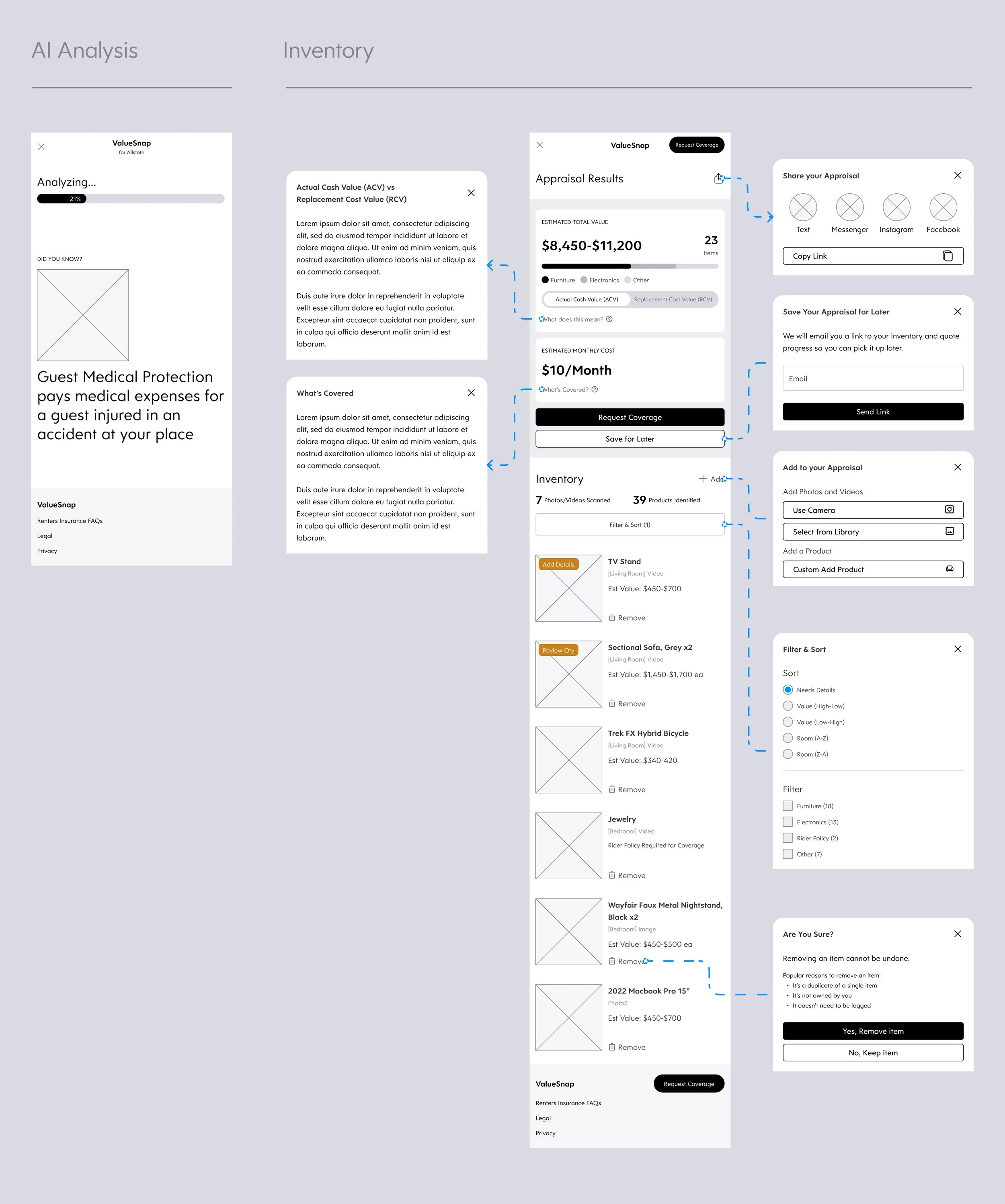
In the classic struggle of balancing necessity with flexibility, especially for a tool that needs to be a quick entry point, a series of modals was created. The modals include helpful information around policy details, lead gen tools like Saving for Later, and failsafes to avoid removing products from the inventory by mistake.
The original Replit also assumed every product scanned would have a high confidence in its evaluation, which is not always possible. A system of badging was added so that users could manually edit products if needed.
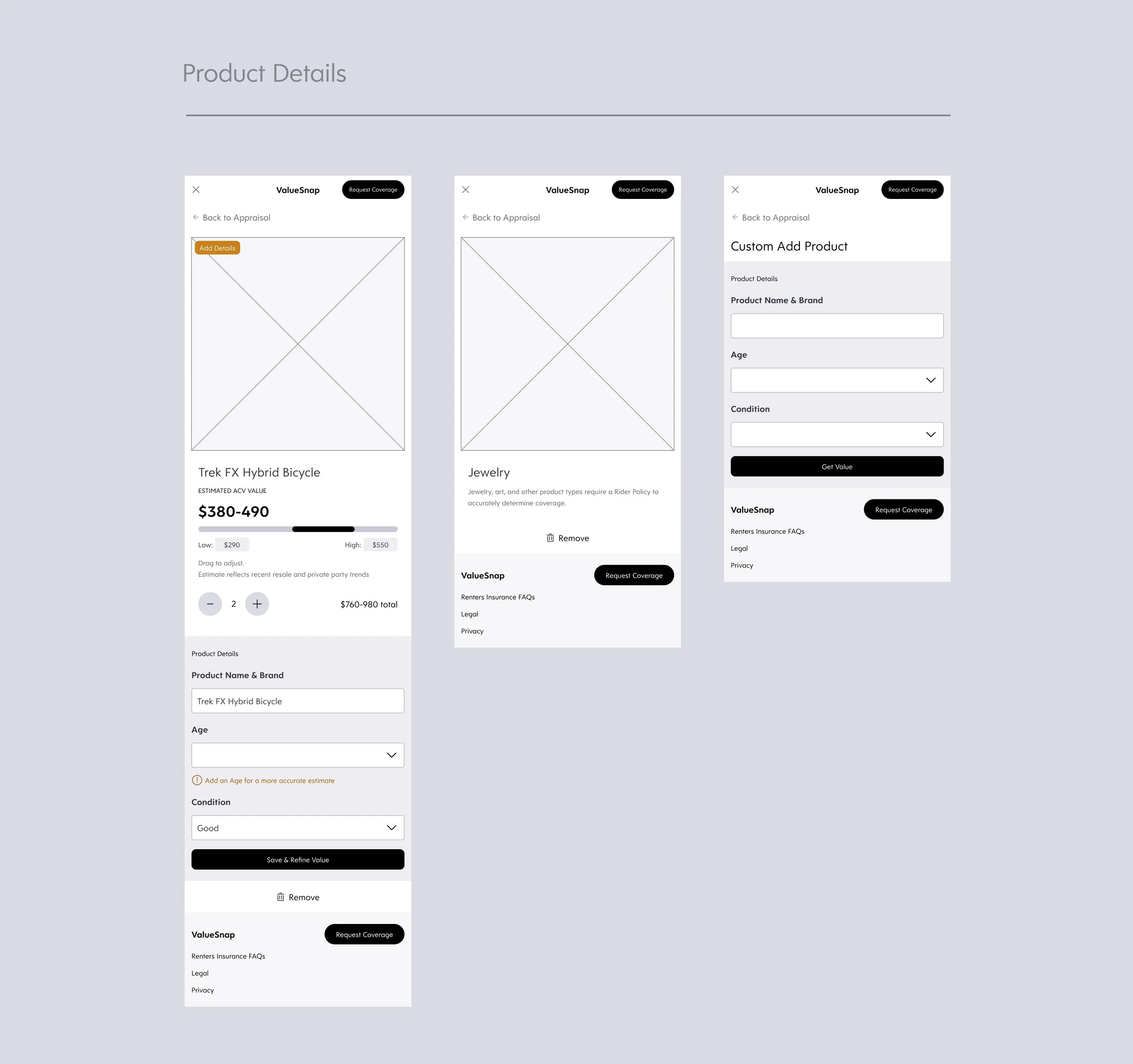
From research into the renters policy details, multiple categorizations of products were required such as traditional and umbrella.
As a final failsafe, a “Custom Add Product” feature was added for users to manually add anything that the AI scan might have missed.
While the expectation was that this would be a tool heavily used on mobile, desktop designs were also created to account for all possible uses.
Final Impact
The impact of this project is most heavily noticed on the process itself. We were able to move extremely fast— cutting a project that might have taken 6+ months into one that took less than 2. It saved considerable time and money to have the high-level flow created with a Replit prototype, allowing our team to focus more on expanding the functionality to account for human behavior.