
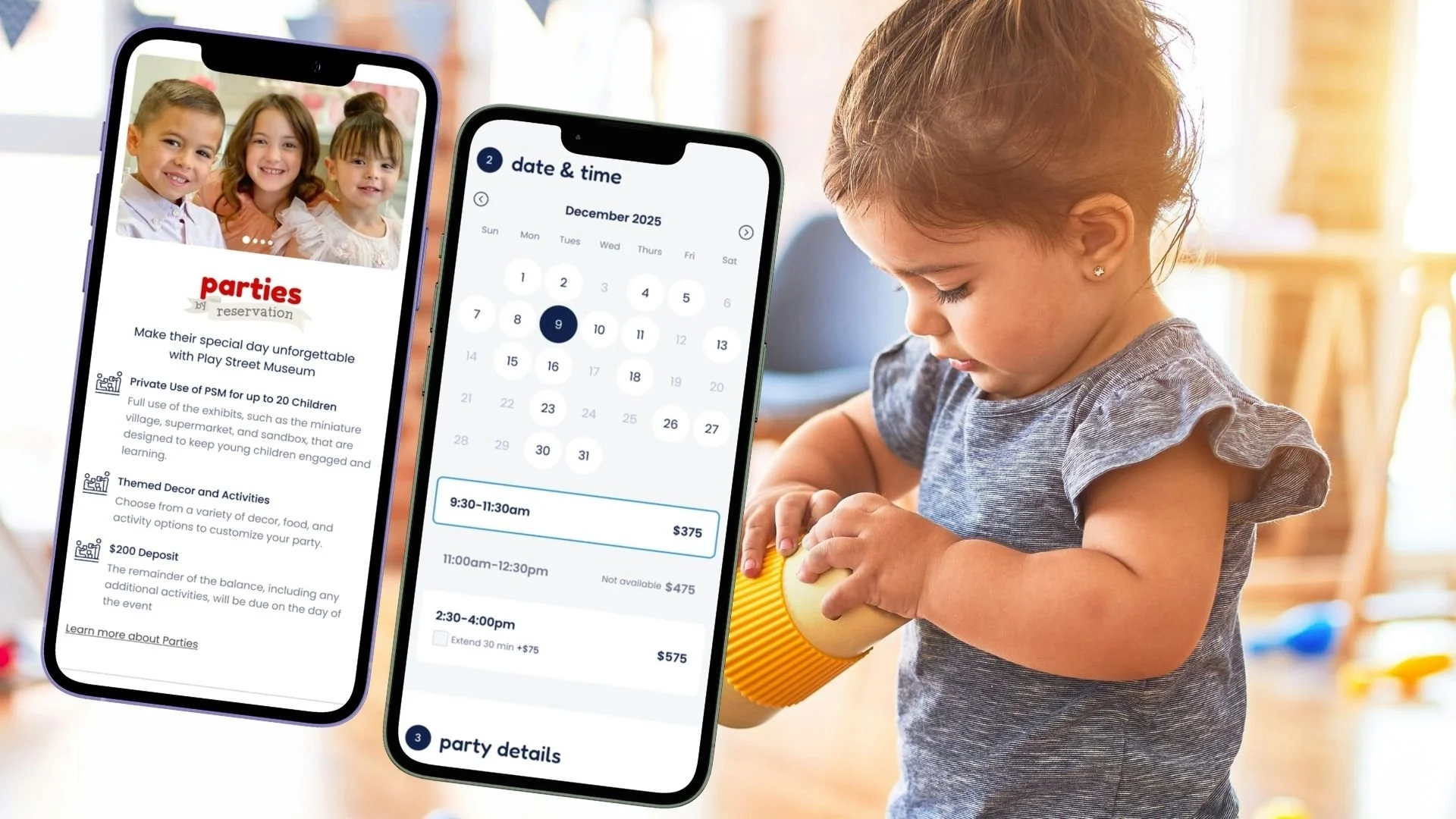
Play Street Museum Franchise Operations PlatformPowering franchise growth through a custom booking system application that serves corporate and consumer users across three interwoven experiences.
-
How might we consolidate operations and scale a growing franchise’s business that is packed with unique challenges?
-
Consolidation of a frankensteined ecosystem so that it unblocks PSM from franchise growth.
Simplification of the booking process to encourage more new guests and more frequent visits.
A punchier brand position that says more with less to keep PSM at the frontlines of child development destinations.
-
I served as the Principal UX Designer, often stretching into architecture and management.
I facilitated workshops with the client, developed planning & architecture documents, formulated wireframes, and finished with the design of final comps and annotations for handoff.
From user flows to backend architecture to color palettes to handoff specs, I was the consistent glue that kept this project on the rails.
Discover & Define
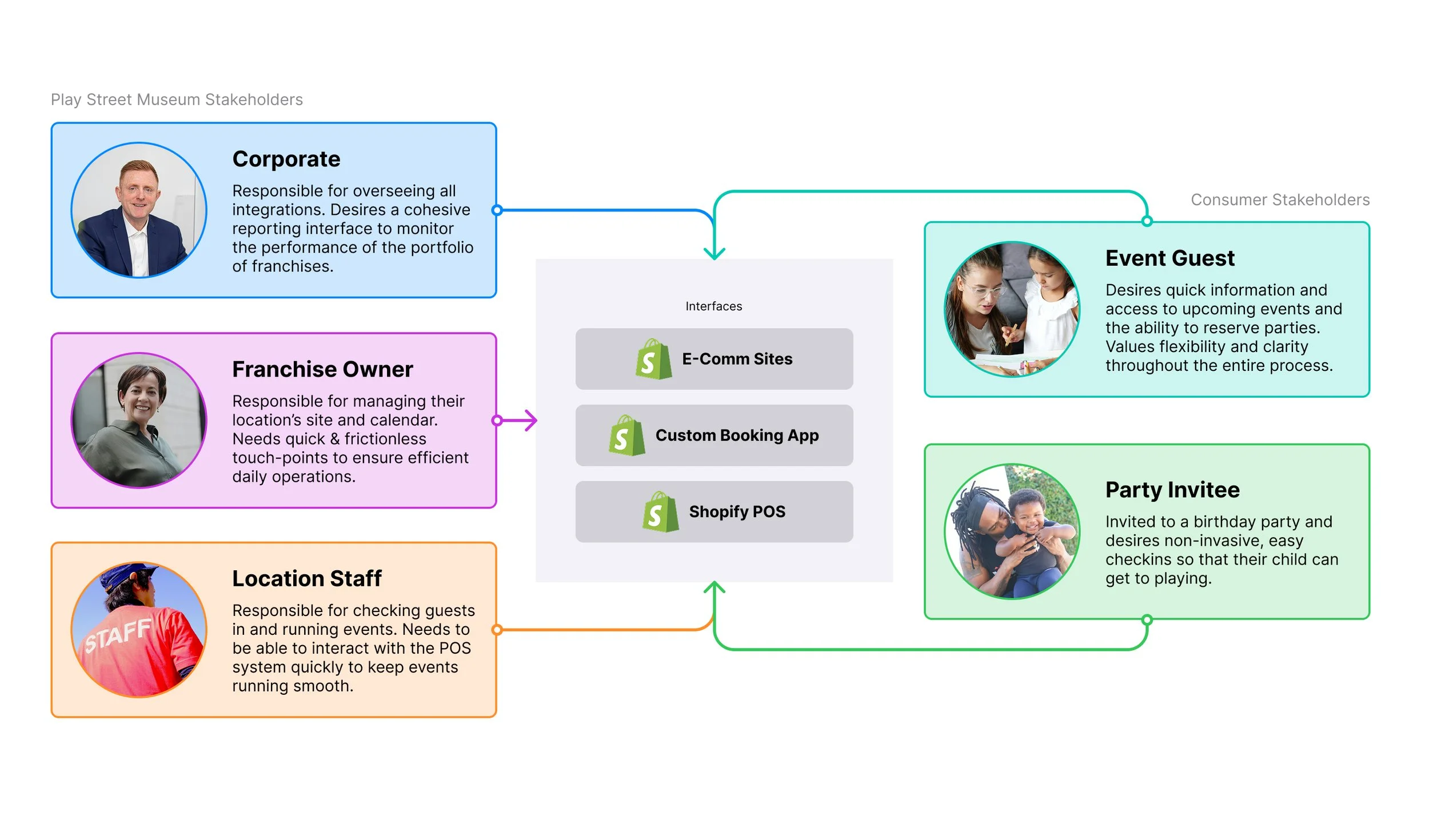
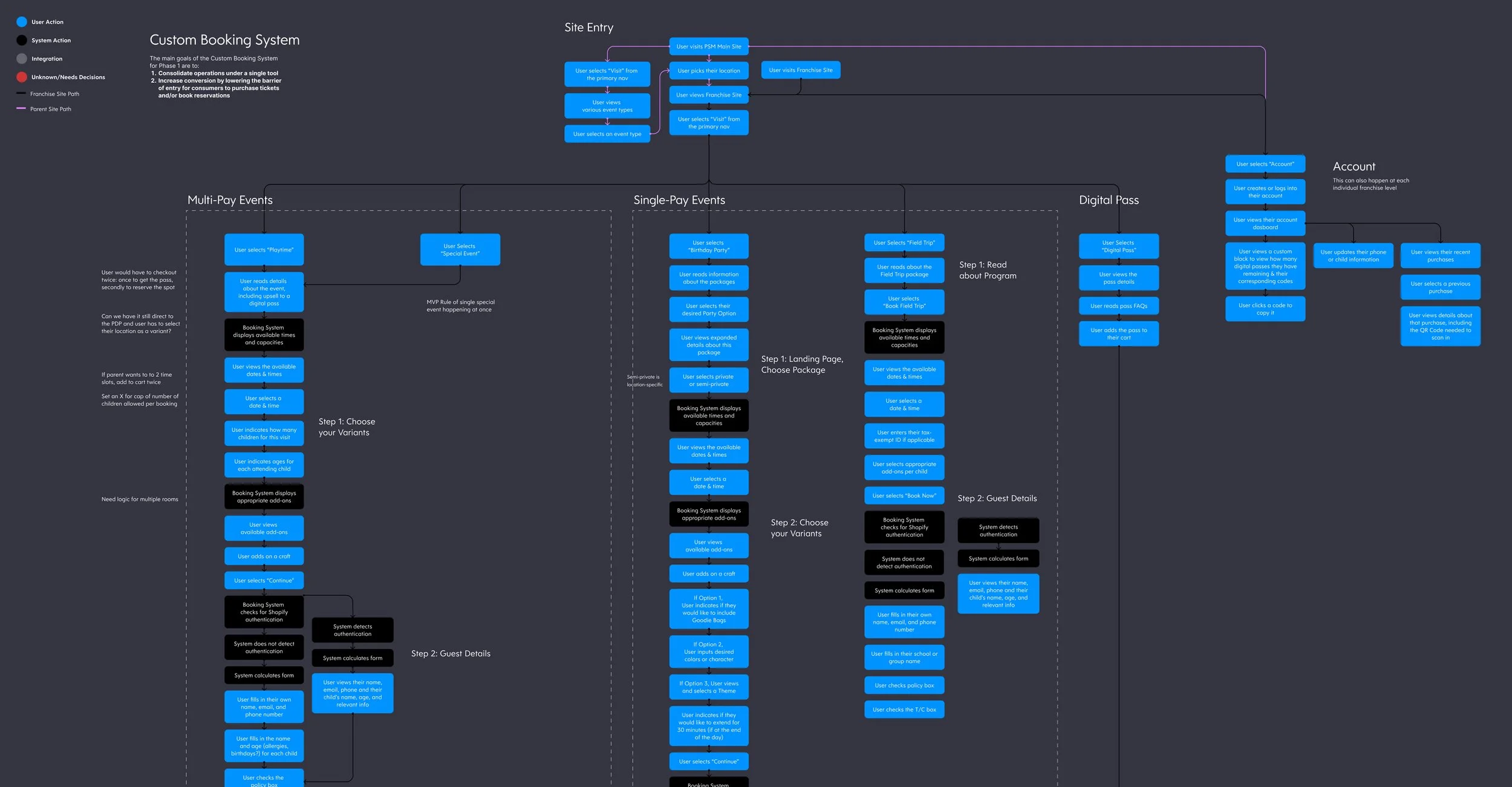
With a lean team that is discovering who they are, (not unlike children learning through play) Play Street Museum had frankensteined their ecosystem together. With visions of consistency, we workshopped to unpack their ecosystem and define the desired flows and experiences.
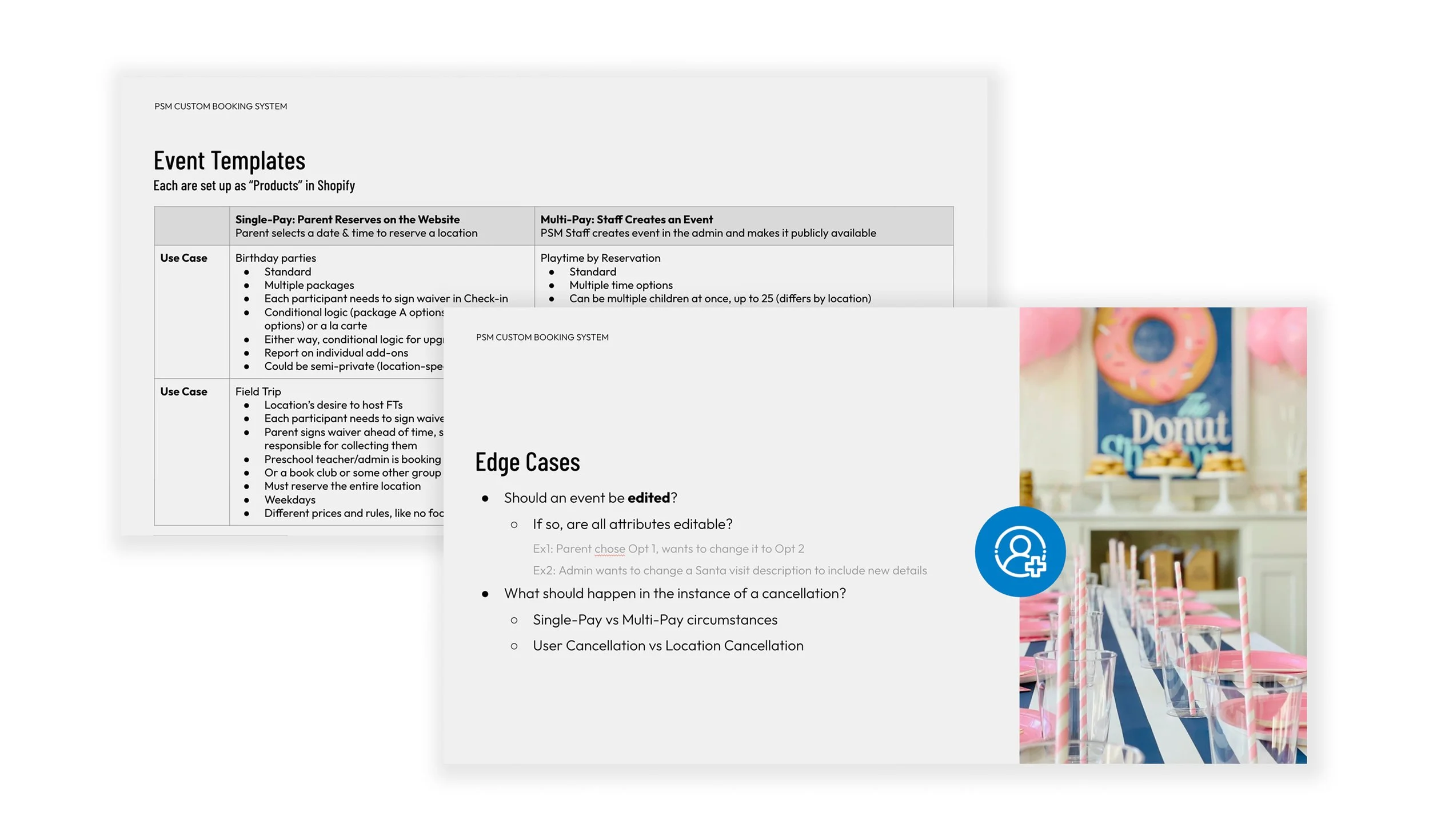
Every workshop unveiled a new business practice that one of the ~50 franchises was performing differently, opening the conversation of flexibility vs consolidation at every turn.
Outdated and confusing verbiage was discovered, as is common with complex legacy systems. It sparked conversations about who PSM is as a brand and what messages need to take priority.
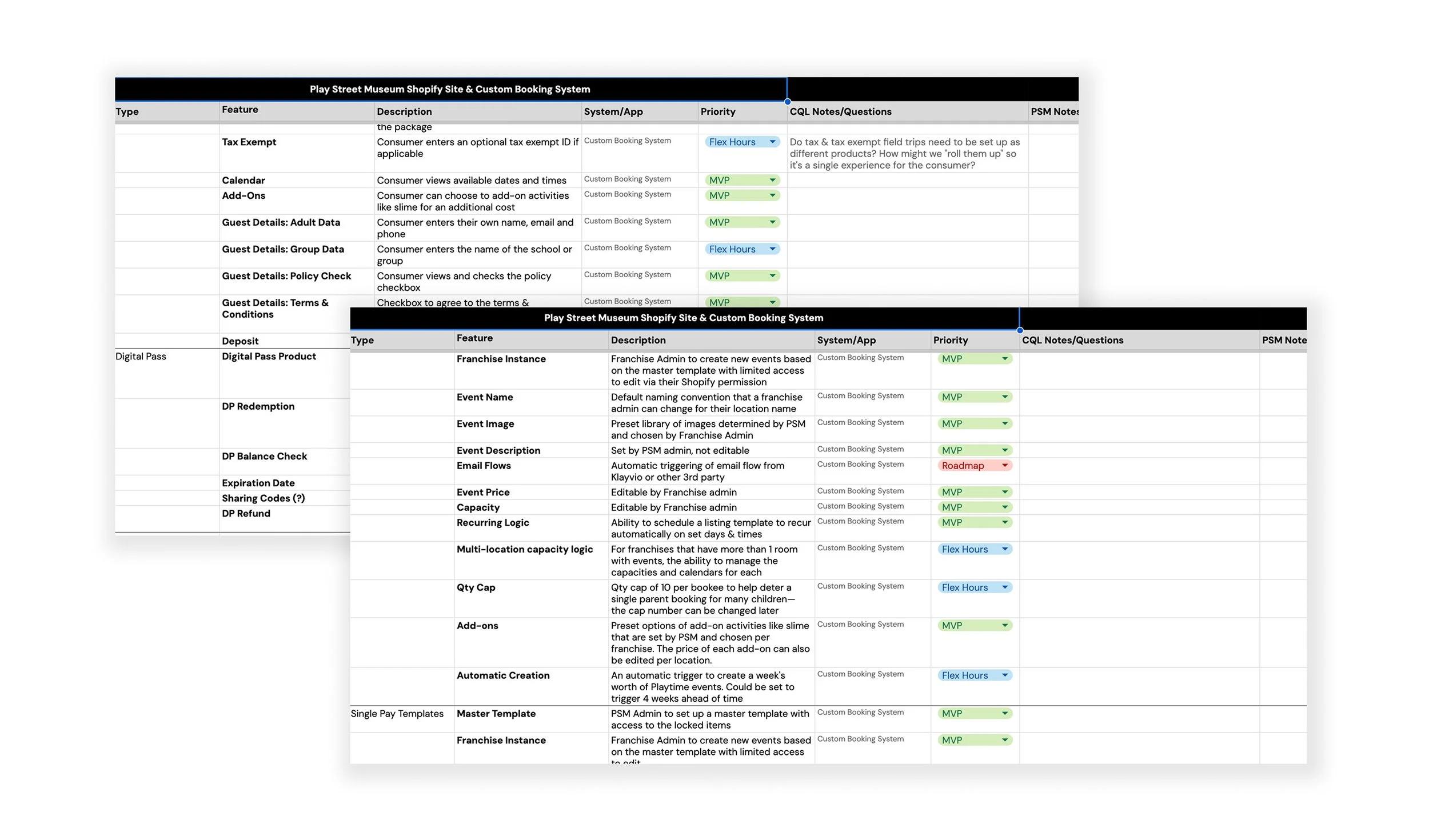
MVP and Roadmap definition and planning was at the forefront of every workshop as well. A tight grasp on necessities vs nice-to-haves was required to avoid the project bloating out of reach.
Workshops • Personas • User Flows • Sitemap • Feature Set & Product Roadmap
Design & Deliver
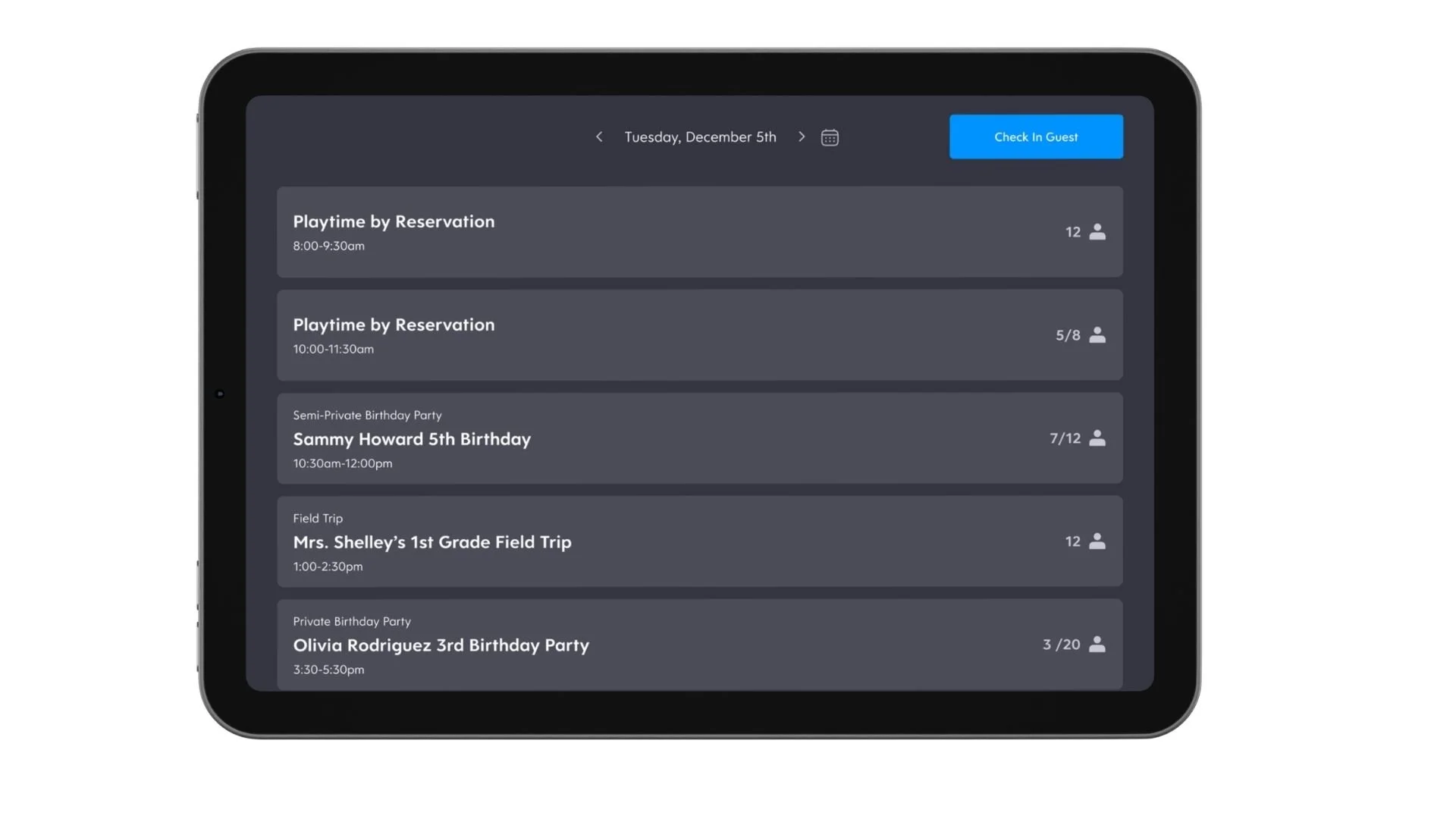
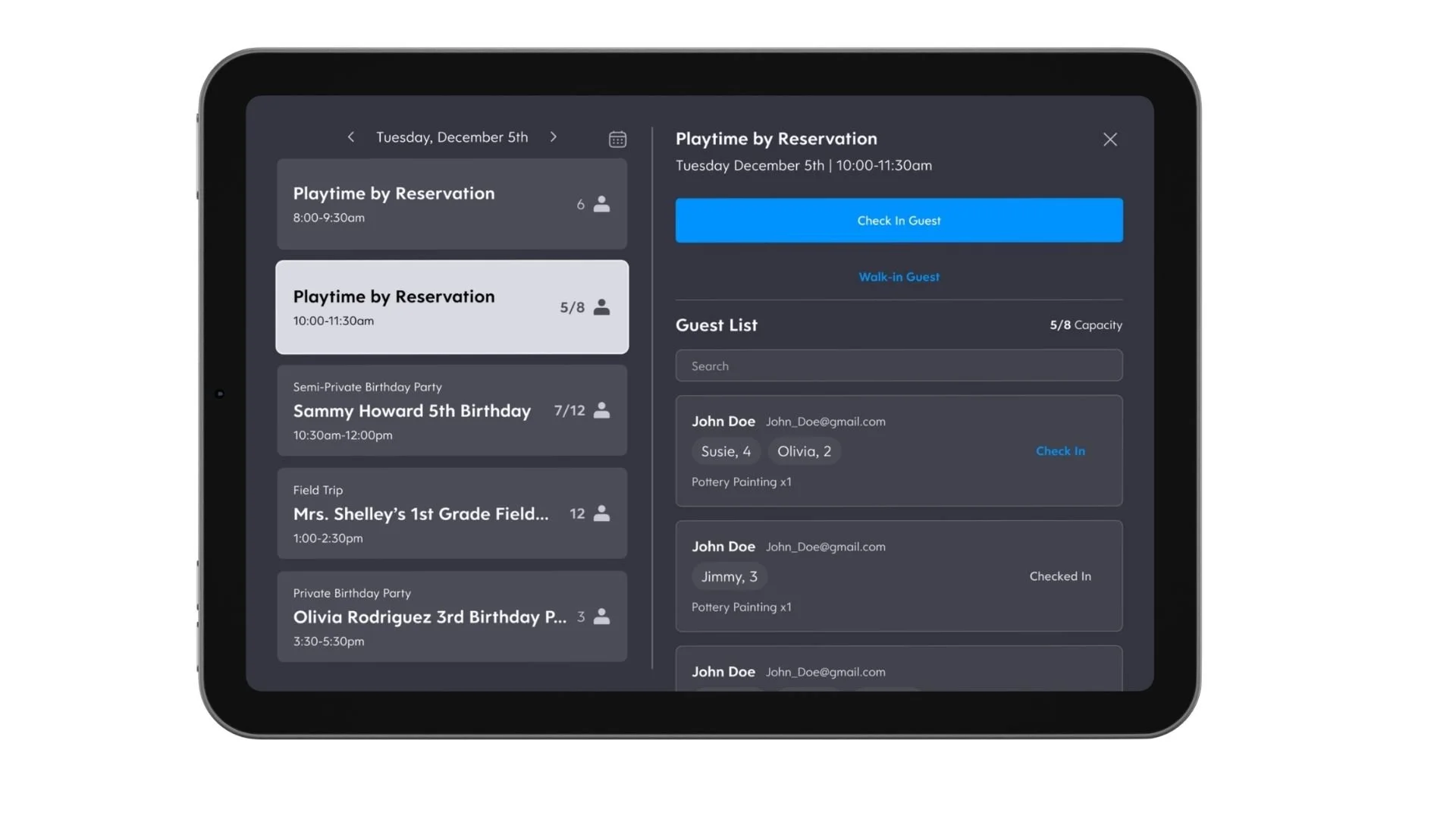
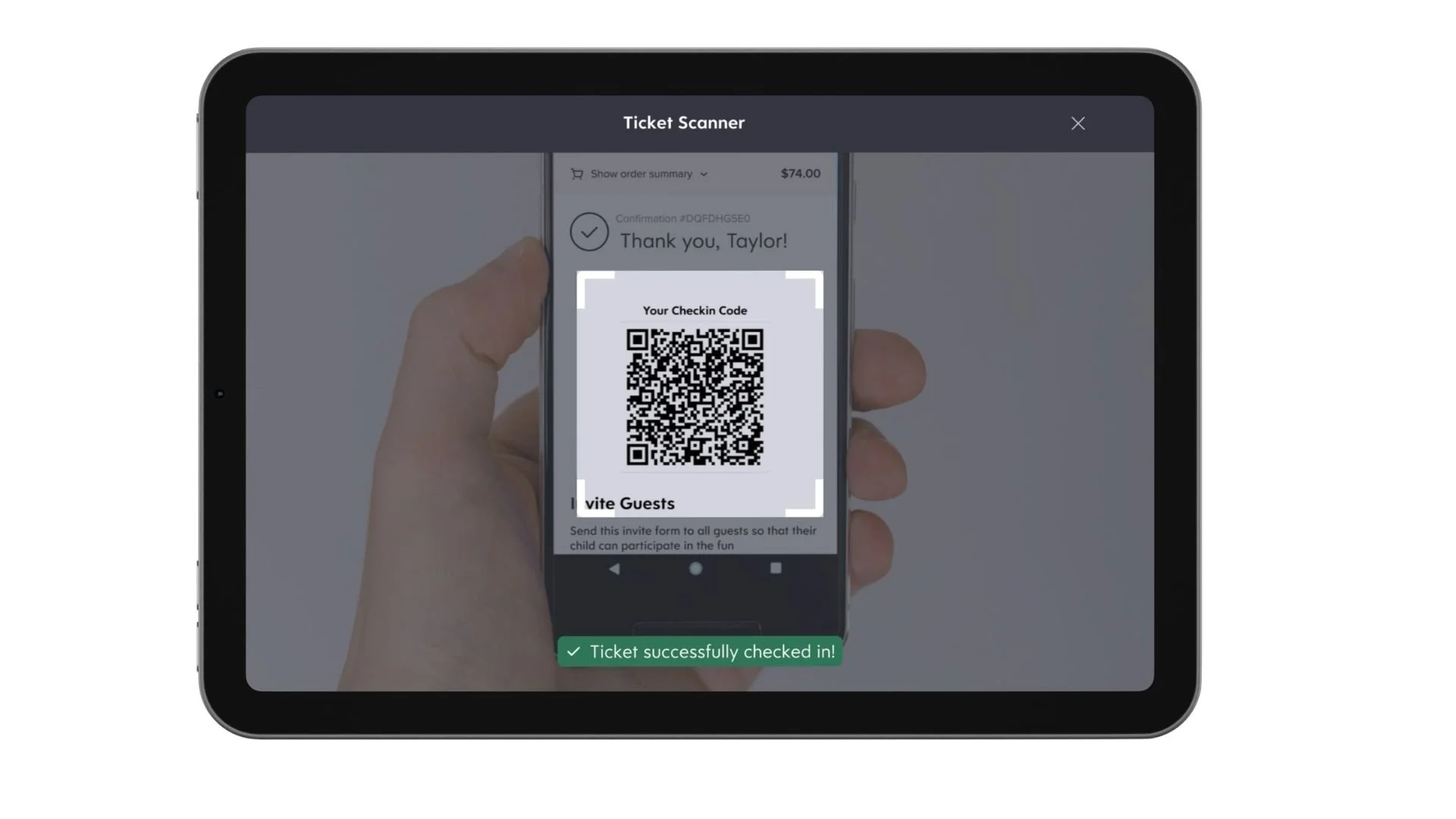
This project had 3 parallel delivery tracks: a Shopify site with custom user-facing booking pages, a Shopify App to control that booking software, and the Shopify POS App to ensure seamless checkin.
Needless to say, consistency in design approach, focus on scalability, and relentless attention to detail were necessary pillars to stand up this interwoven experience.
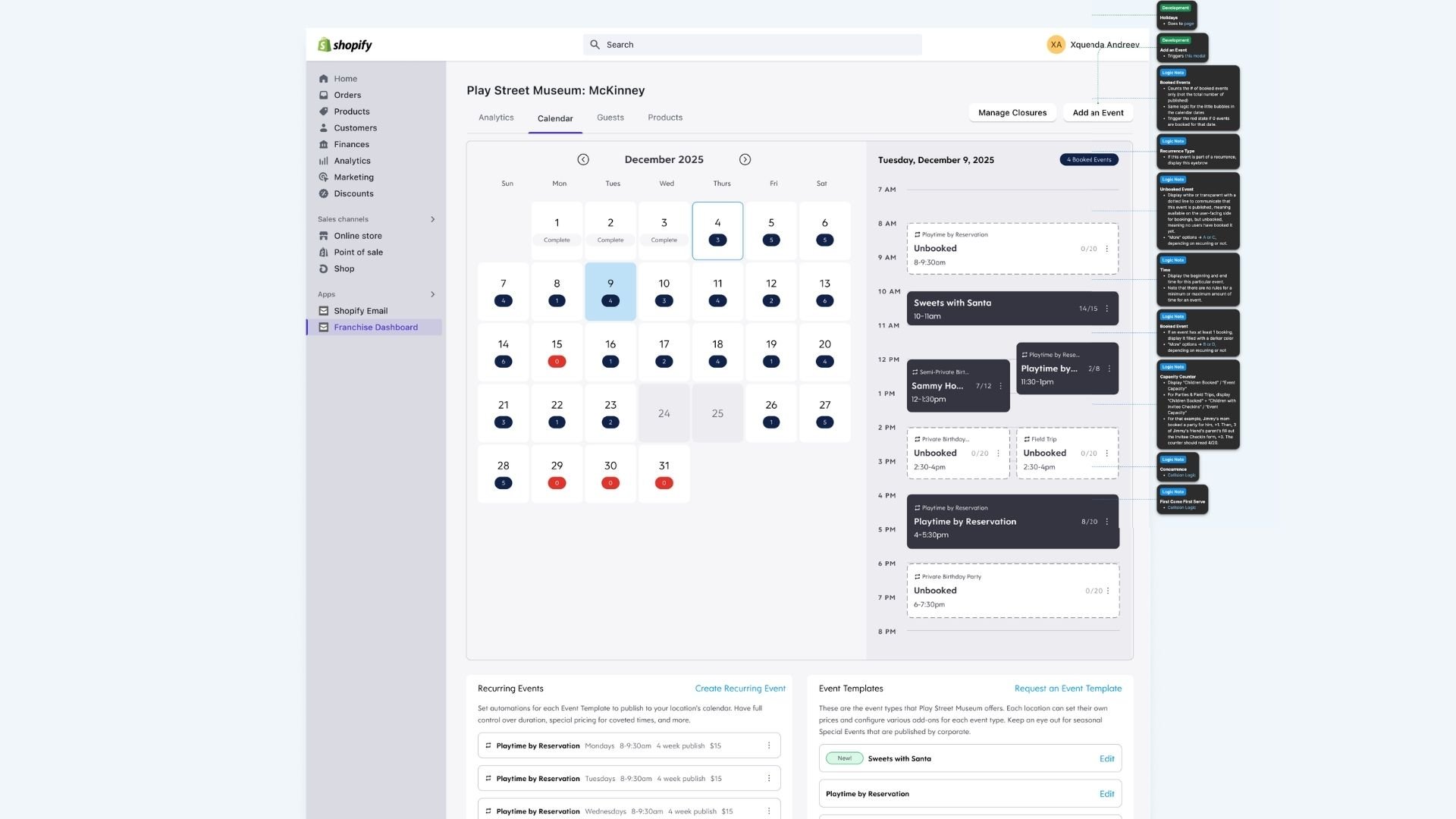
I tracked every front-end function of the user-facing booking system to the Franchise Dashboard app to ensure every piece of data had a home and method of being managed. With a team of six developers, this mapping came in handy for faster build cycles.
Finally, attention to the design to keep it educational and playful, as it should be for a children’s museum. It was a great exercise in balancing conversion-focussed design with a playful user group.
Wireframe • Prototype • Design System
Track 1: Shopify Site
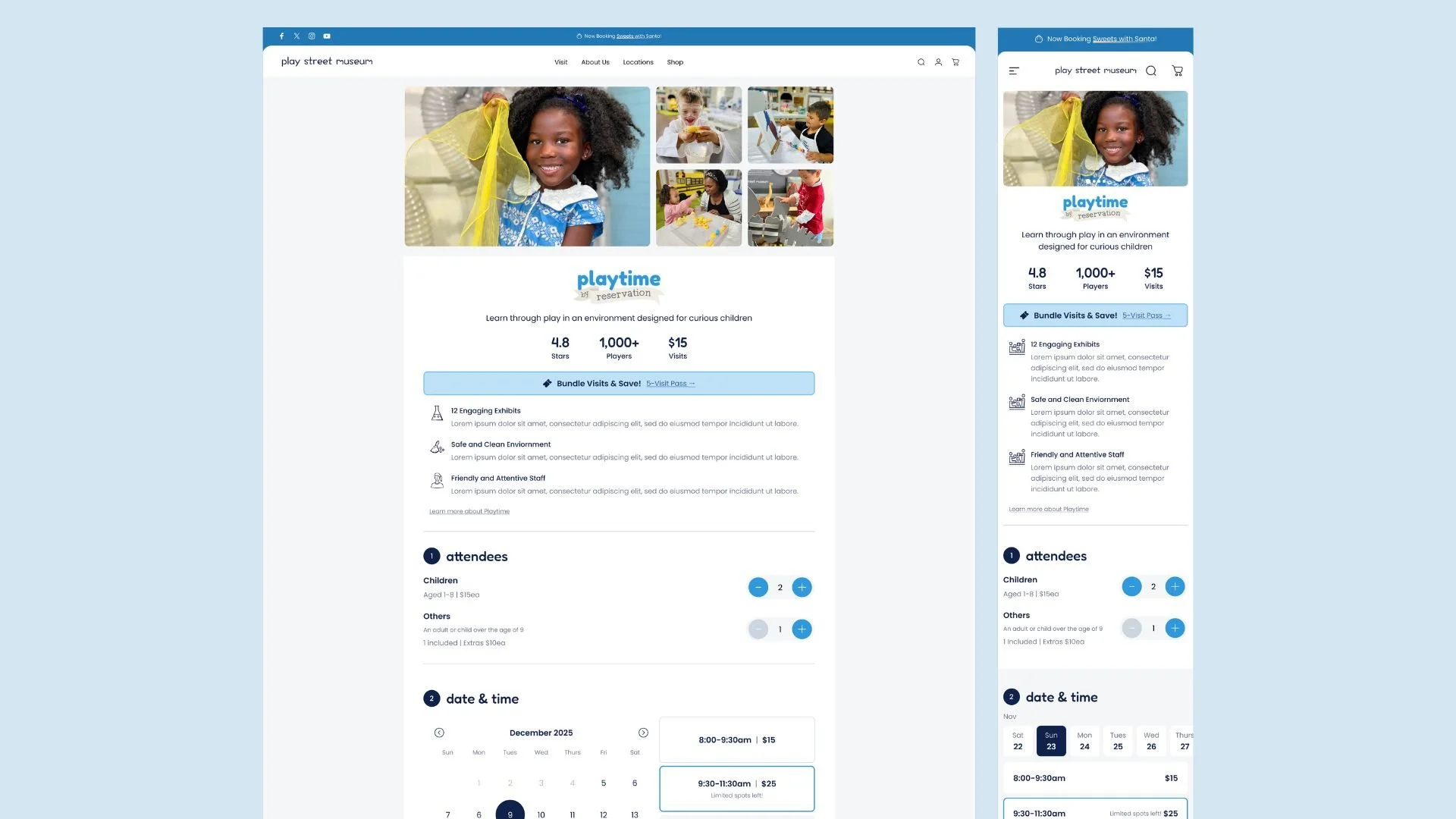
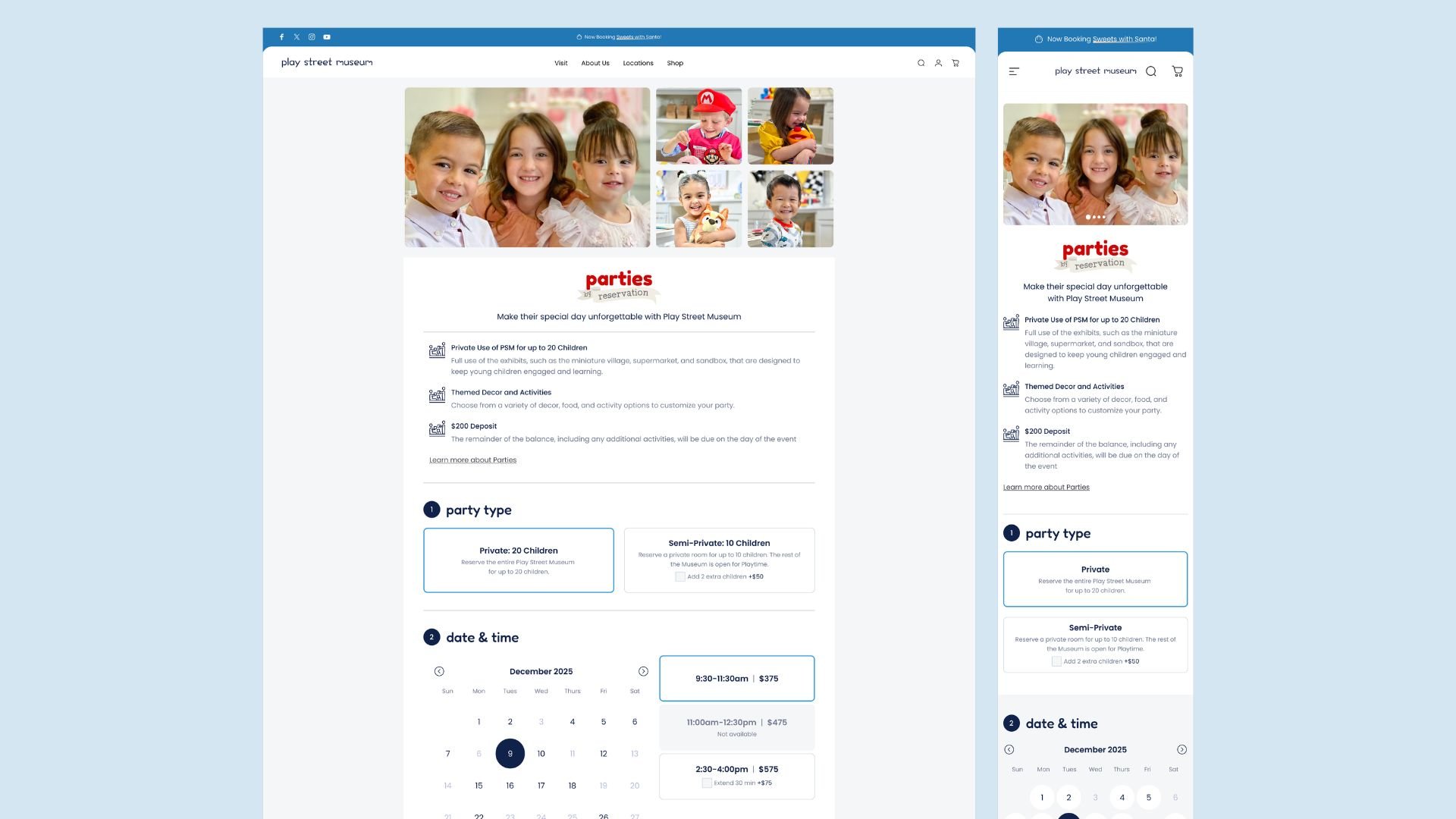
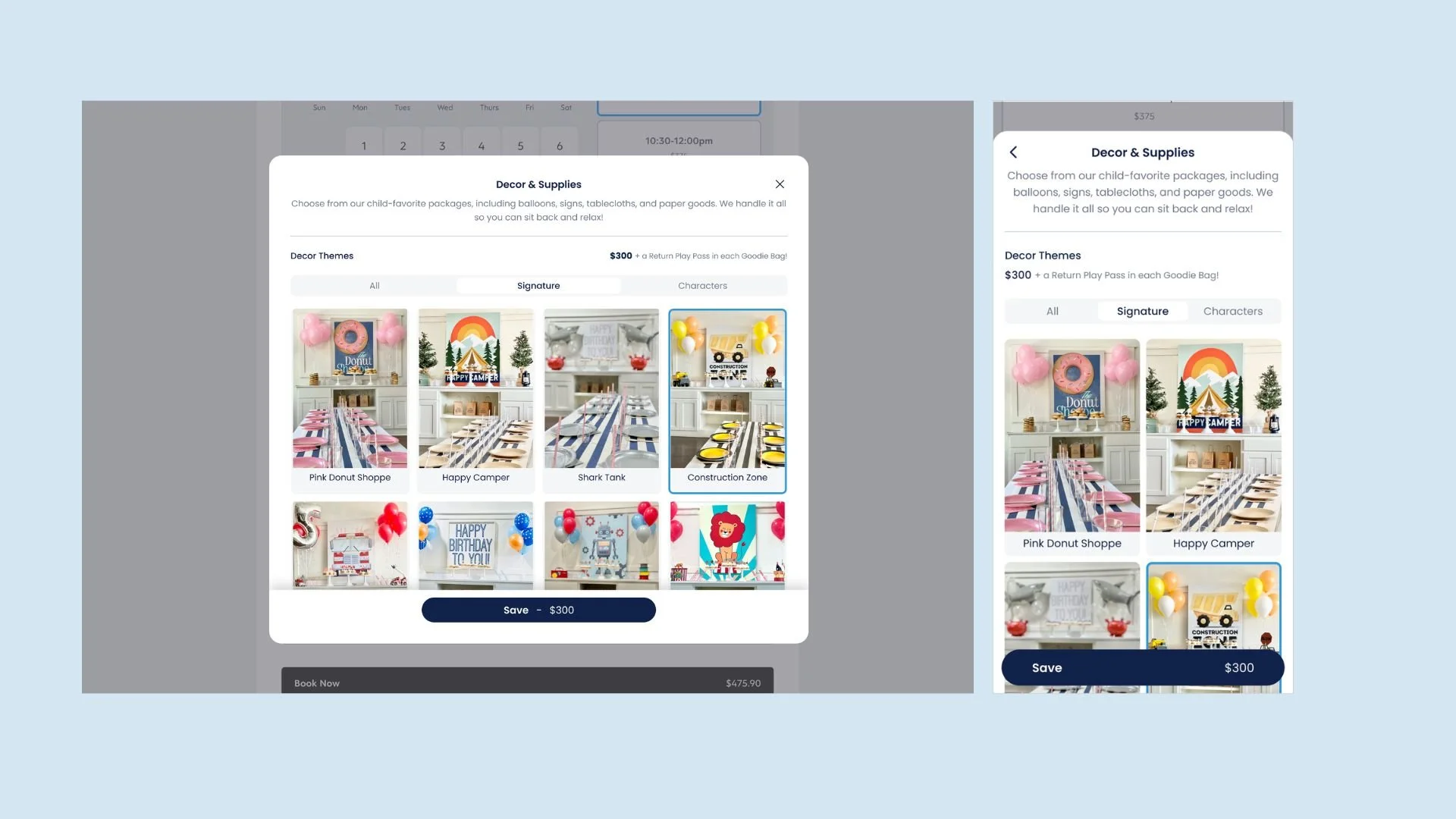
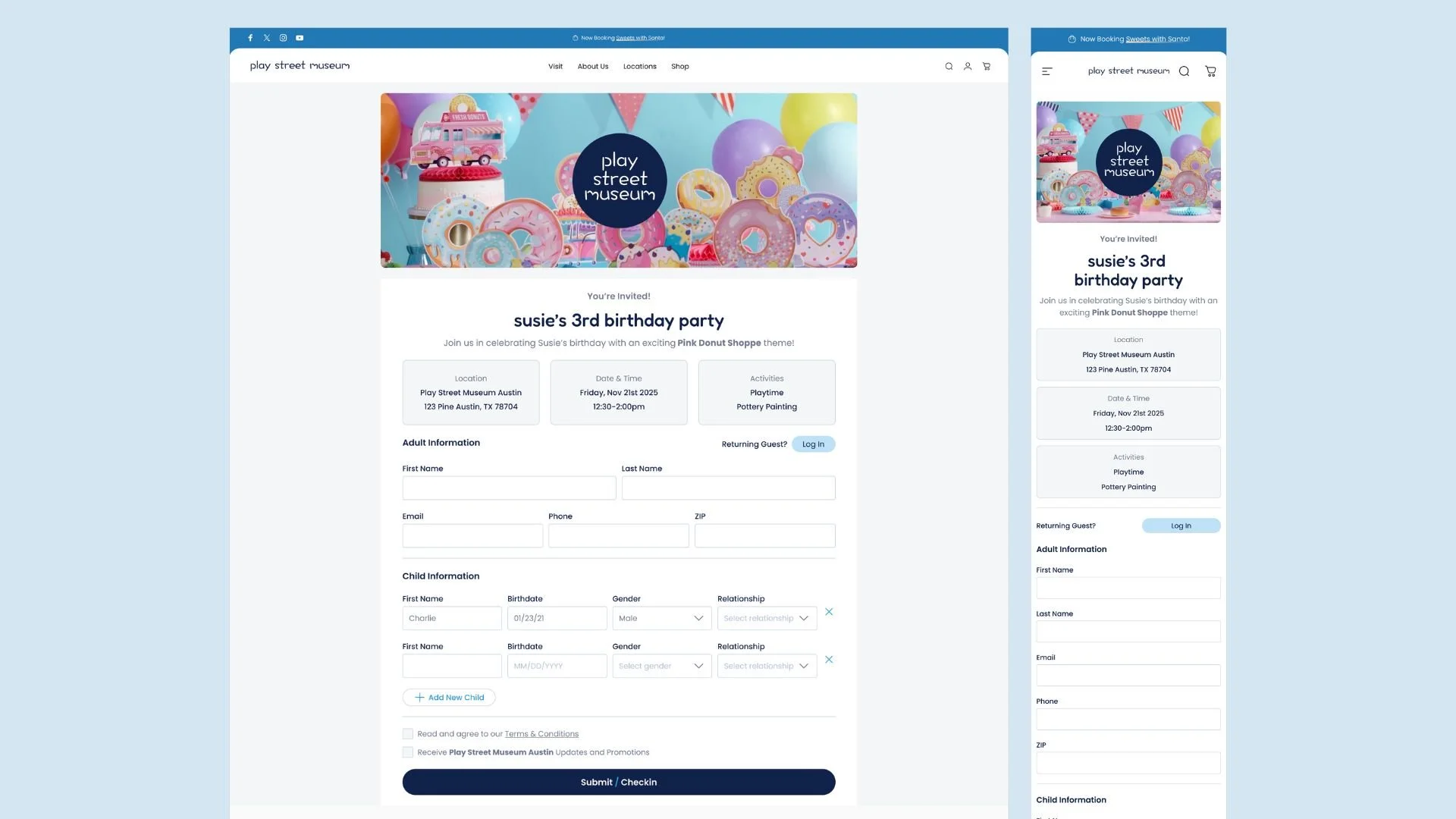
Custom Shopify pages for parents to engage with the various event types, quickly view available dates, add-on crafts, and easily reserve their spot, especially on mobile devices.
Track 2: Management App
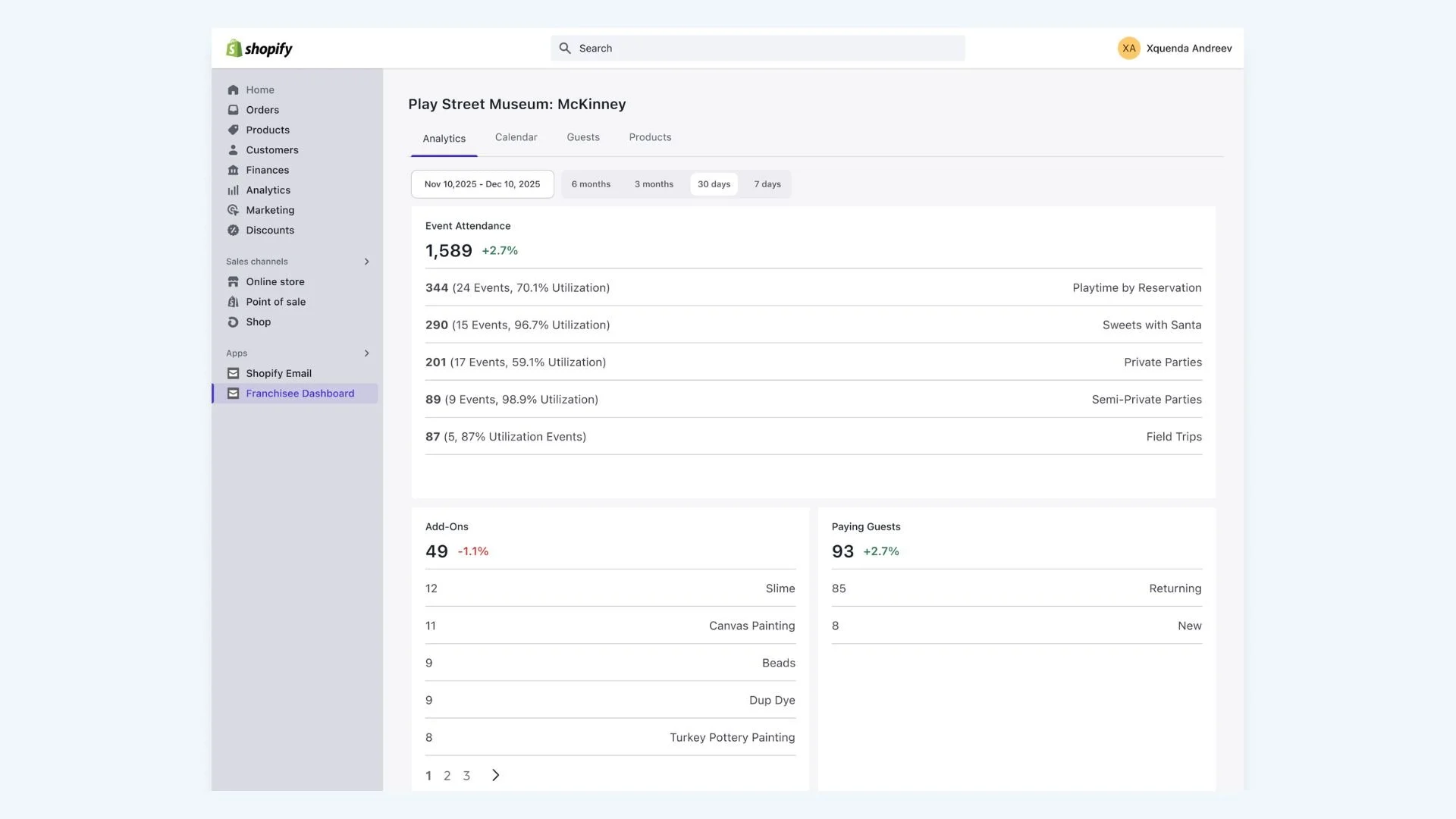
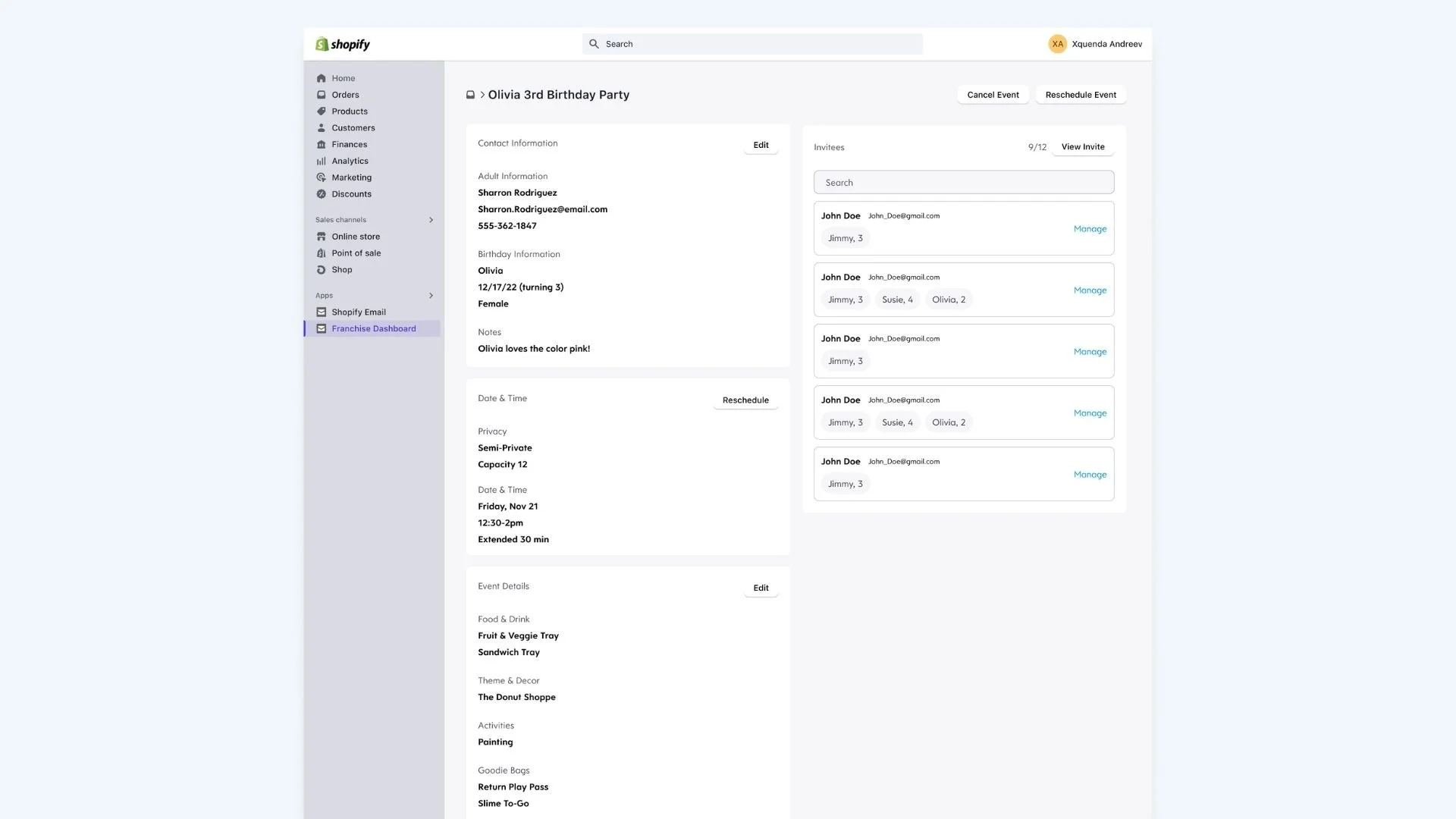
A custom-built Shopify App called, “Franchise Dashboard” where each franchise owner can manage their own calendar, events, guests, and digest analytics to assess their performance.
Track 3: Shopify POS App
Finally, a custom Shopify POS app to allow Franchise staff to view upcoming events and seamlessly check guests in.
Final Impact
The organizational impact of this multi-faceted project has unblocked Play Street from opening new franchises, growing their already robust 48 global locations. Consolidation of event types and business practices surrounding them has allowed Franchises to host most events in larger capacities, boosting the company’s earning potential. And finally, the parents and guests who already love their local PSM can book Playtimes faster, discover more seasonal events, and enjoy a best-in-class birthday party booking process.